

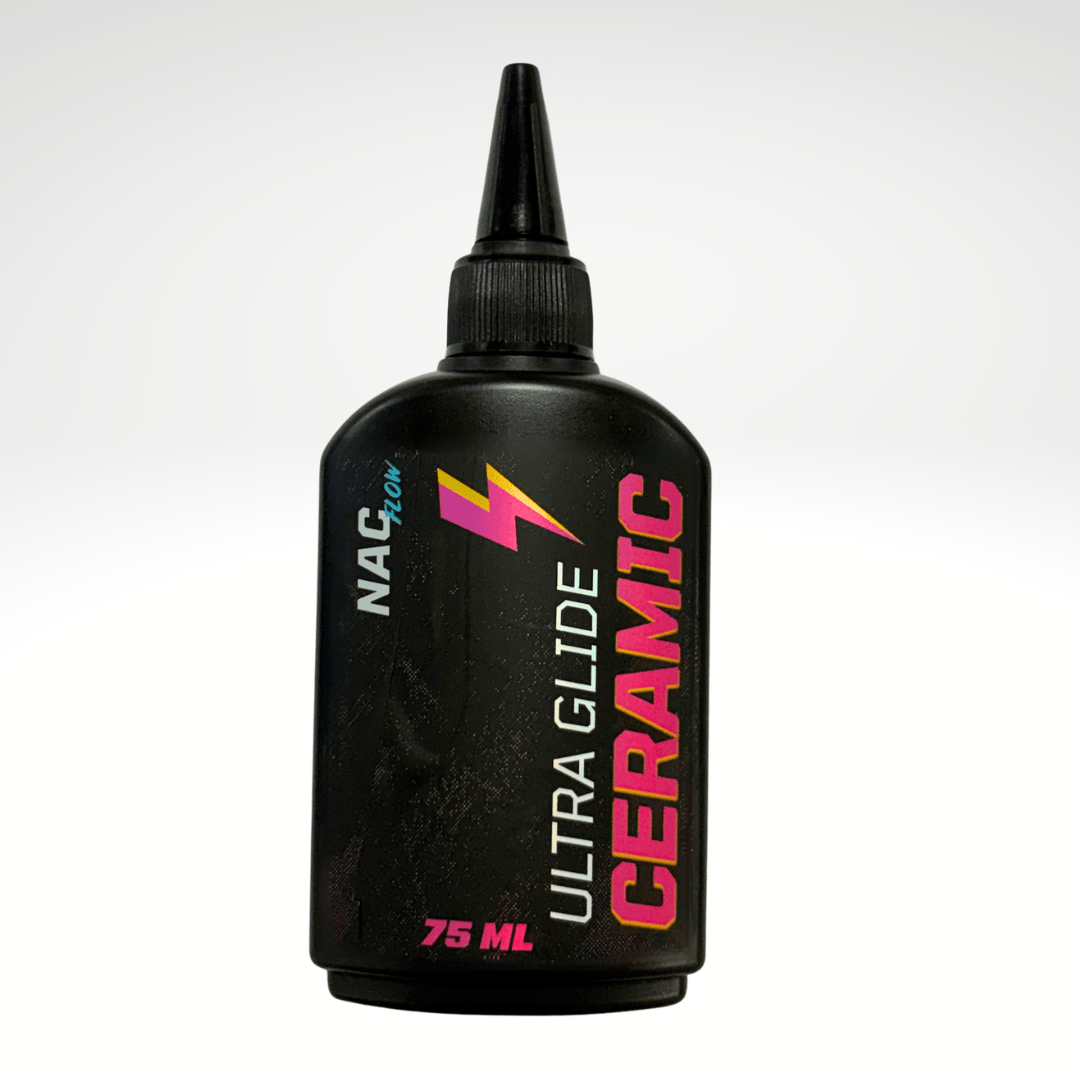
Ultra Glide Ceramic Dry Chain Lube 75ml
Ultra Glide Ceramic Dry Chain Lube 75ml
Couldn't load pickup availability
Looking for a long-lasting dry chain lube for your road bike? The NAC Ultra Glide Ceramic Lube is a 75ml ceramic dry lube that holds for 400km between applications — well beyond what a standard dry lube manages. Micro-fine ceramic particles settle into the load-bearing surfaces inside every link, forming a slick film that keeps metal off metal, so more of each pedal stroke reaches the rear wheel instead of leaking away as heat and noise. Because it runs dry, that film doesn't become a dust magnet the way oil-based lubes do — fewer re-lubes, and a cleaner chain between them.
Best For
Road cycling through India's dry season — long training rides, brevets, and any ride where drivetrain efficiency and a clean chain matter. The 400km interval means far fewer re-lubes across a high-mileage block. It suits gravel bikes and dry-season commuting equally well. Ultra Glide is built for dry and dusty conditions; a dry film won't survive sustained monsoon rain, so wet-season riding calls for the NAC All Weather Magic Lube instead.
Key Features
- 400km between applications — the ceramic film resists squeezing out under load, outlasting a standard dry lube by a wide margin and cutting how often you re-lube across a training block.
- Ceramic micro-particle film — fills surface imperfections inside the chain to keep metal off metal under load.
- Measurable friction reduction — less drag per pedal stroke means more of your effort reaches the rear wheel, where it counts over a long road ride.
- Runs dry, stays clean — dries to a hard film that resists picking up dust and grit, so your chain doesn't build the abrasive paste that oil-based lubes attract.
- Noticeably quieter — no dry rattle or squeak; just clean shifts and a silent drivetrain.
- Extends drivetrain life — protects chain, cassette, and chainrings from the wear that forces early replacement.
- Light rust protection — forms a moisture barrier against light rain and humidity between rides.
- Precision applicator — fine nozzle places lube on the rollers, not on your rotor or rim.
- Economical — lasts 400km per application; ₹899 for 75ml.
How to Apply
Ceramic lube bonds to bare metal, so start with a thoroughly degreased, fully dry chain — this step matters more here than with any other lube. Apply one drop per link while rotating the cranks backwards, then keep backpedalling for 20–30 seconds so the ceramic works into the rollers. Wipe all excess off the outer plates with a clean dry cloth, and let it dry fully before riding for the strongest film.
75ml. The longest-lasting dry lube for road riders who count every watt. Free shipping on prepaid orders above ₹999.
Ceramic lube only performs on a clean chain — deep-clean first with the Ultra Green Drivetrain Cleaner.
In case you have any queries, reach out to us on WhatsApp at +91 99875 97589
Shipping, Returns and Warranty
Shipping, Returns and Warranty
Shipping
Order is usually dispatched in 1-2 days of placing the order, Delivery can take between 3-7 days depending on the delivery location. You can easily track the order by viewing the link that is shared with you after placing the order.
Warranty
Please note that this product is a consumable item and is not eligible for warranty coverage. To learn more you can view our warranty policy.
Returns
We have a 15 day return policy, which means you have 15 days from the date of delivery of your order to request for a return. To be eligible for a return, your item must be in the same condition as you received it. The product must be unused with no damage, tags, and in its original packaging. You’ll also need the receipt or proof of purchase. To start a return, you can contact us at support@thenacstore.com or +91 99875 97589. Our Team will then review the images and videos sent by you and once approved, we will arrange for a return, as well as send instructions on how to pack your product and also the date of the pickup. Items sent back to us without first requesting a return will not be accepted. After receiving the product at our warehouse, we will inspect the product. On approval of inspection, we aim to initiate the refund between 3 to 7 business days.
Damages and issues: Please inspect your order upon reception and contact us immediately at support@thenacstore.com if the item is defective, damaged or if you receive the wrong item, so that we can evaluate the issue.
Exceptions / non-returnable items: Custom products such as special orders or personalized items are not eligible for a return. We also do not accept returns for hazardous materials, flammable liquids, or gases. Please get in touch if you have questions or concerns about any of these specific products.
Refunds: Once we’ve received and inspected your return, we shall notify you and let you know if the product was approved or not. If approved, you’ll be automatically refunded on your original payment method. Please note it may take some time for your bank to process and reflect the refund back into your bank account
Have any queries? Our Team is happy to assist you. Write to us at support@thenacstore.com or WhatsApp us at +91 99875 97589
To learn more you can view our return policy
Frequently Asked Questions
Is ceramic chain lube better than regular chain lube?
How long does one application last?
Do I have to clean my chain before applying it?
Does it work on 11- and 12-speed road drivetrains?
How much should I apply?
Can I use it during the monsoon?
Is it safe around disc brakes?
